
Sinoun's Reading List
Why am I doing this?
Because it’s fun! 🤓
I’m an avid reader, and I thought it would be refreshing to be a bit more personal. Here are some readings I find worth sharing.
Links are shared and updated weekly (or so) in my email signature. I’ll always drop the link here to have an archive of all the links I share.
If you feel inclined, please reach out and let me know your thoughts!

The Formula
by Darryl Anka
The one will seem super woo-woo to most people, but it was a fascinating read, especially the first half. Some of the philosophies were familiar, but some ideas expanded my mind into new ways of thinking. I love when ideas force me to think outside the box. The book is another reminder that we are the universe experiencing itself and that we are all connected.
“…This means that to be self-aware, in other words, to be conscious, there must be a reflection that appears to be separate from you. Not that it actually is separate. The appearance of separateness is sufficient to cause self-reflection and thus, self-awareness,”
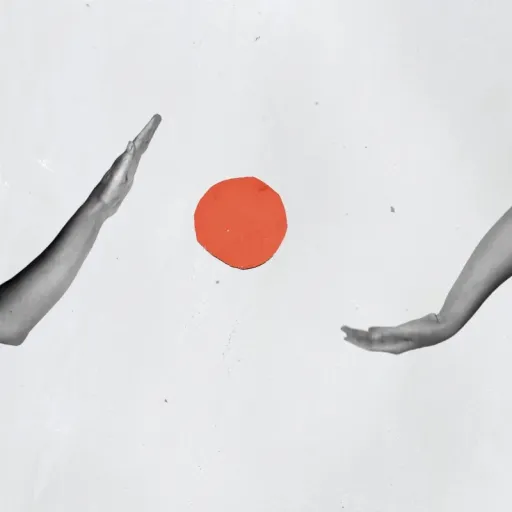
The Power of Play
by Big Think
There’s no denying that we tend to play less as we get older, but here’s a friendly reminder of how important play is for our body, brain, heart, and nervous system. Big Think releases a beautiful monthly magazine that I’m subscribed to, and this is one of my favorite issues.
It’s easy to take small steps to incorporate more play into your life. For example, I often jump to try to touch a branch or leaf of a tree on my daily walks. I used to do this as a kid, but why should I stop? Not only does it bring joy, but I know I’m also improving my full-body coordination.
We should all play outside more often.
“Our sense of play, it turns out, is crucial not only for having fun, but also for keeping our aging brains healthy and uncovering new ideas in ways that can’t be outsourced to an algorithm.” -Alex Hutchinson
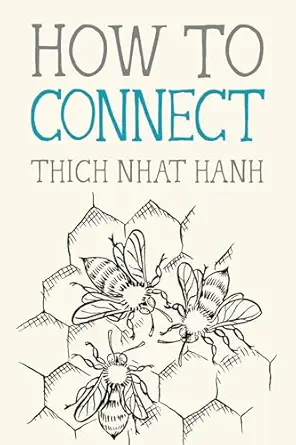
How To Connect
by Thich Nhat Hanh
One of the biggest lies or illusions of our time is that we are all separate. We are interconnected not just with each other, but with all of nature. Could it be that the illusion of individualism helped us succeed as a species, but could now be the downfall of us all?
In our reality, the isolated “self” is a psychological construct. Humans love to construct labels for the “other”, such as the social construct of race, gender as a binary, “normal” vs. mentally ill, class or caste systems, nationality and citizenship.
But we are fundamentally interconnected biologically, socially, ecologically, and cosmically. The atoms in your body were forged in dying stars, your thoughts were shaped by people you’ve never met, and every breath you take contains molecules once inhaled by every human in history and exhaled by organisms across the planet. The boundary between ‘you’ and ‘not you’ is mostly a useful fiction.
While Thich Nhat Hanh captures interbeing poetically and in accessible language, the true depth of interconnection is something we constantly forget. That forgetting has consequences. Remembering it is what sustains our bond with each other and with nature.
“We are like islands in the sea, separate on the surface but connected in the deep.” -Williams James

The Resilience Paradox
by Anne-Laure Le Cunff
“Resilience stops being a positive when it keeps people tolerating what should be fixed.”
A short, but good read to remind us all that resilience doesn’t mean to endure and keep going. Resilience is about being flexible and being able to choose different strategies.
Dr. Anne-Laure is a brilliant neuroscientist who I started following recently. I love her work and it’s been resonating with me a lot lately.

Six-Minute X-Ray
by Chase Hughes
Humans are interesting. Learning about them is fascinating. I’ve been binging a lot of Chase’s content lately and would love to take his NCI System training one of these days.

Monstress (Book 2)
by Marjorie Liu (Author), Sana Takeda (Illustrator)
Just finished Book Two and can’t wait to get started on Book Three. Each volume is about 500 pages of viscerally dark beauty. Monstress is hands down the most stunning and epic graphic novel I’ve ever read. The storytelling, art, and characters are extraordinary. If you wanna immerse yourself in a dangerous and terrifying steampunk world with badass (and sometimes sexy) characters, pick this one up. You’ll find yourself in a world full of hauntingly magical, violently fantastical, matriarchal, and queer themes. The author and illustrator are both incredibly talented women and I would totally fangirl if I met them. These gorgeous, hardcover books should be in every bibliophile’s collection. 10/10.