

Your website might look great on the surface, but beneath the design there may be hidden SEO issues quietly holding it back. The challenge many business owners face is figuring out how to diagnose those problems.
Should you run a quick scan using a DIY SEO tool, or bring in a professional agency to conduct a deeper website audit? Short answer: If your website’s performance affects leads, sales, or growth, a full-service SEO audit often provides insights and direction that automated tools alone cannot.
Understanding the difference between these two approaches can help you make a smarter decision for your business.
What an SEO Web Audit Actually Does
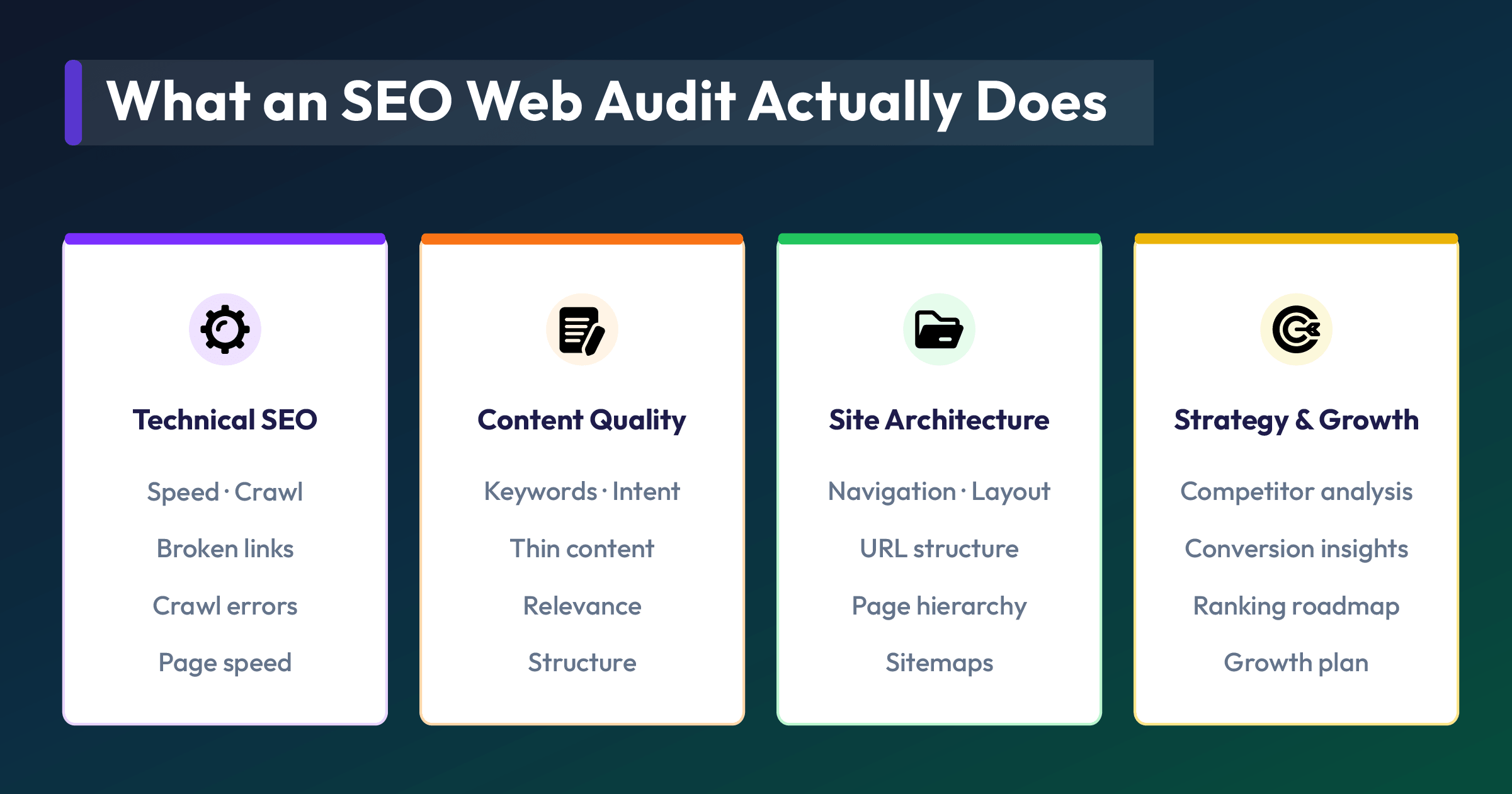
An SEO website audit is essentially a health check for your website. It examines how search engines view your site and identifies issues that may be preventing pages from ranking well.
A thorough audit typically looks at several areas of your website, including:
- Technical SEO health
- Website structure and navigation
- Content quality and relevance
- Page speed and mobile usability
- Indexing and crawlability
- Internal linking structure
These evaluations help uncover problems that might otherwise go unnoticed.
Common issues discovered during SEO audits include:
- Broken links and crawl errors
- Missing or poorly optimized metadata
- Thin or outdated content
- Slow page load speeds
- Weak keyword targeting
- Poor internal linking
It helps create a roadmap for improving your website’s visibility, usability, and search performance.
When a DIY SEO Audit Tool Might Be Enough
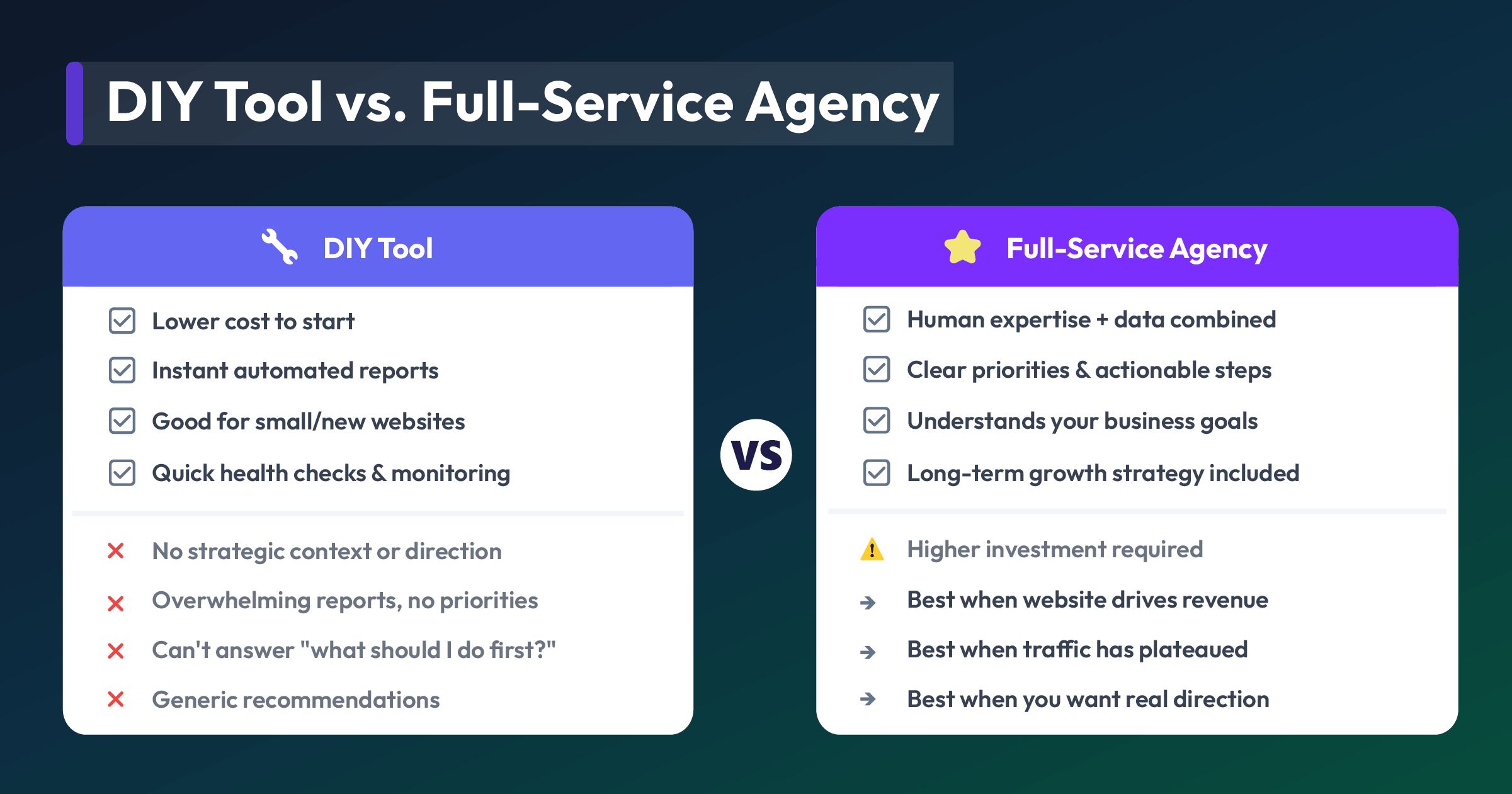
DIY SEO tools can be useful, especially for basic website checks. Many platforms provide automated scans that identify common technical issues and performance metrics.
DIY audit tools often work well when:
- Your website is small or newly launched
- You want a quick technical health check
- You are learning the basics of SEO
- You need routine monitoring of site performance
Some advantages of DIY tools include:
- Lower cost compared to agency services
- Instant automated reports
- Useful metrics for tracking site health
They can be helpful for spotting obvious technical issues. However, they typically stop at reporting the problem rather than explaining its real impact.
That is where many businesses begin to run into limitations.
The Limitations of Automated SEO Tools
While DIY tools can provide valuable data, they often lack the context needed to turn that data into meaningful action.
1. Lack of Strategic Context
Automated AI tools cannot fully understand your:
- Industry competition
- Target audience
- Business goals
- Content strategy
Without that context, recommendations can be generic and difficult to apply effectively.
2. Overwhelming Reports
Many DIY tools generate lengthy reports filled with warnings and technical terms. Business owners may end up confused with hundreds of alerts but no clear idea of which problems matter most.
3. Limited Strategic Guidance
Perhaps the biggest limitation is that automated tools rarely answer broader strategic questions, such as:
- Which pages should be optimized first?
- What topics should your content focus on?
- How should your site structure evolve as it grows?
These decisions often require experience and human interpretation.
When a Full-service SEO Agency Makes Sense
A full-service SEO agency may be worth considering if:
- Your website traffic has plateaued or declined
- Your site generates leads or revenue for your business
- Your website has grown larger or more complex
- Previous SEO efforts have produced unclear results
- You want a long-term growth strategy
Professional SEO audits typically include a broader analysis that combines data with human expertise.
This often involves:
- Technical SEO diagnostics
- Keyword and content analysis
- Competitor research
- Site architecture evaluation
- Internal linking strategy
- Conversion optimization insights
Instead of simply identifying issues, agencies help implement and prioritize improvements that can make the biggest difference.
The Biggest Difference: Data Versus Direction

Both DIY tools and agency audits can be useful, but they serve different purposes.
DIY tools help identify problems, while agency audits help determine what to do about them.
Understanding this difference is key when deciding which approach fits your situation.
A Practical Way to Decide
If you are unsure which path to take, consider asking yourself a few practical questions:
- Do I clearly understand my website’s SEO problems?
- Do I know which changes would improve rankings or traffic?
- Do I have time to analyze and implement fixes?
- Is my website important for generating leads or customers?
If most answers are yes, a DIY tool may be a reasonable starting point.
If most answers are no, professional guidance may provide faster clarity and direction.
Need a Professional Web Audit?
If you want a clearer picture of how your website is performing and where the biggest SEO opportunities may be, ShiftWeb can help. Check out our web audit services to get a comprehensive review and help guiding your next steps online.


