

Your website might look great on the surface. Clean design. Helpful content. A few blog posts. Maybe even some traffic coming in. But under the hood, there are often hidden problems quietly holding the site back.
Pages that Google cannot crawl properly. Slow loading elements. Missing internal links. Outdated content. These small issues add up, and over time they can seriously limit your visibility in search.
That is why SEO audits are becoming more important than ever. Search engines are evolving quickly, especially with the rise of AI-driven results and increasingly sophisticated ranking signals. A website that performed well two years ago may now be missing several critical optimization factors.
An SEO audit gives you a clear picture of what is working, what is broken, and what can be improved.
This checklist walks through the essential elements every website should review in 2026.
1. Technical SEO: The Foundation of Your Entire Website
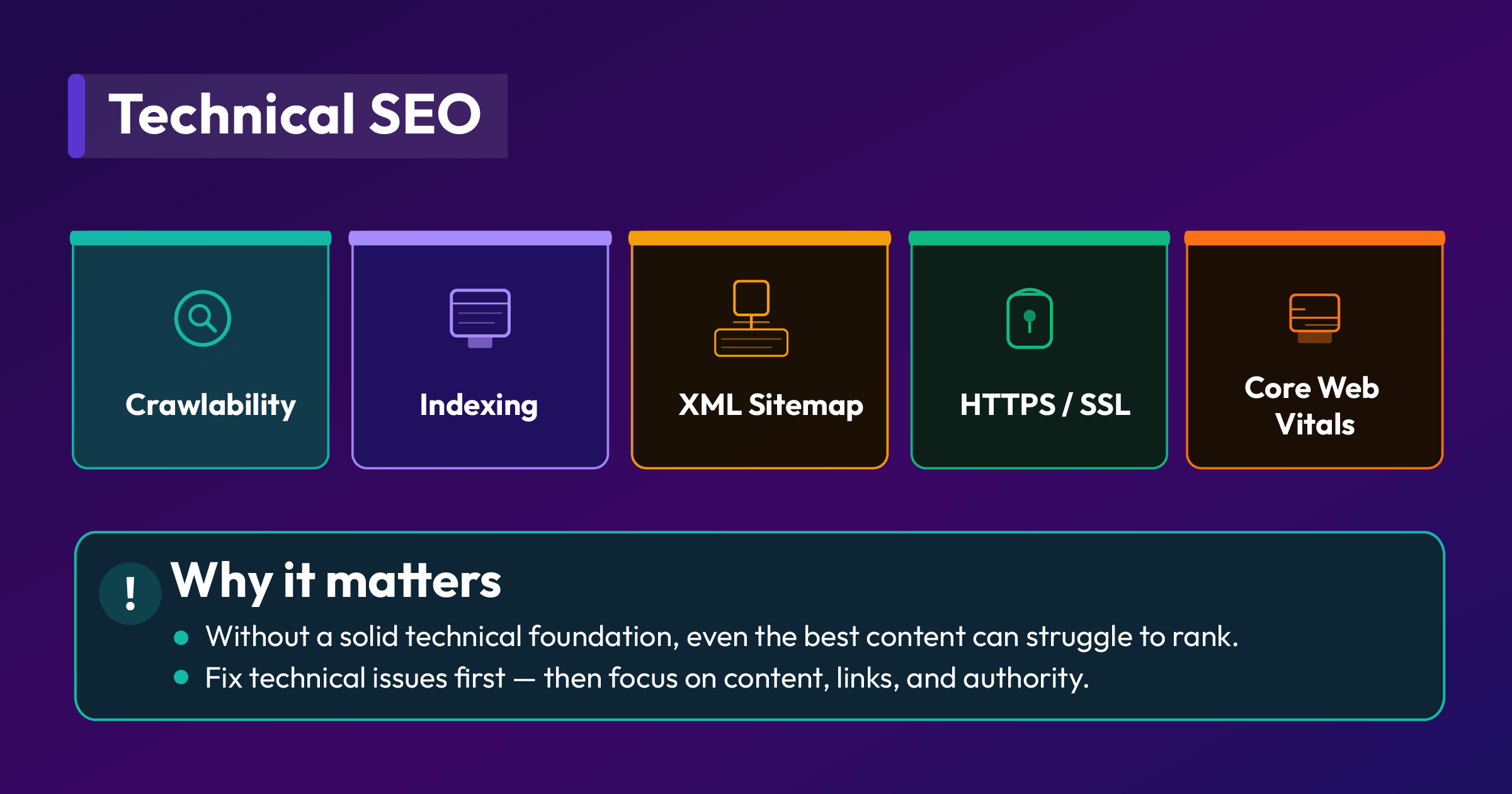
Technical SEO is the infrastructure of your website. It ensures that search engines can crawl, interpret, and index your pages correctly. Without a solid technical foundation, even excellent content can struggle to rank.
Crawlability
Search engines use automated crawlers to explore websites. If these bots cannot reach your pages, the content may never appear in search results.
Important checks include:
- robots.txt rules blocking key pages
- crawl errors inside Google Search Console
- broken links returning 404 errors
- redirect chains that confuse crawlers
Fixing crawl issues ensures your important pages are accessible and understood.
Indexing Problems
Sometimes pages exist but are never added to Google’s index. This can happen due to:
- incorrect noindex tags
- duplicate page versions
- conflicting canonical tags
- soft 404 errors
An audit should confirm that all valuable pages are properly indexed.
XML Sitemap Health
Your sitemap helps search engines understand which pages are most important. During an audit you should confirm that:
- the sitemap is up to date
- only indexable pages appear in the file
- the sitemap is submitted to search engines
A clean sitemap improves crawl efficiency.
HTTPS and Security
Security has been a ranking signal for years. Every website should operate fully on HTTPS.
Check for:
- valid SSL certificates
- mixed content warnings
- outdated security protocols
Search engines prioritize secure websites because they protect user data.
Core Web Vitals
Google evaluates user experience through Core Web Vitals metrics such as:
- Largest Contentful Paint
- Interaction to Next Paint
- Cumulative Layout Shift
If these metrics are poor, rankings can suffer even if the content is strong.
Technical SEO may not be visible to users, but it determines whether search engines can properly evaluate your website.
2. Website Speed and Performance
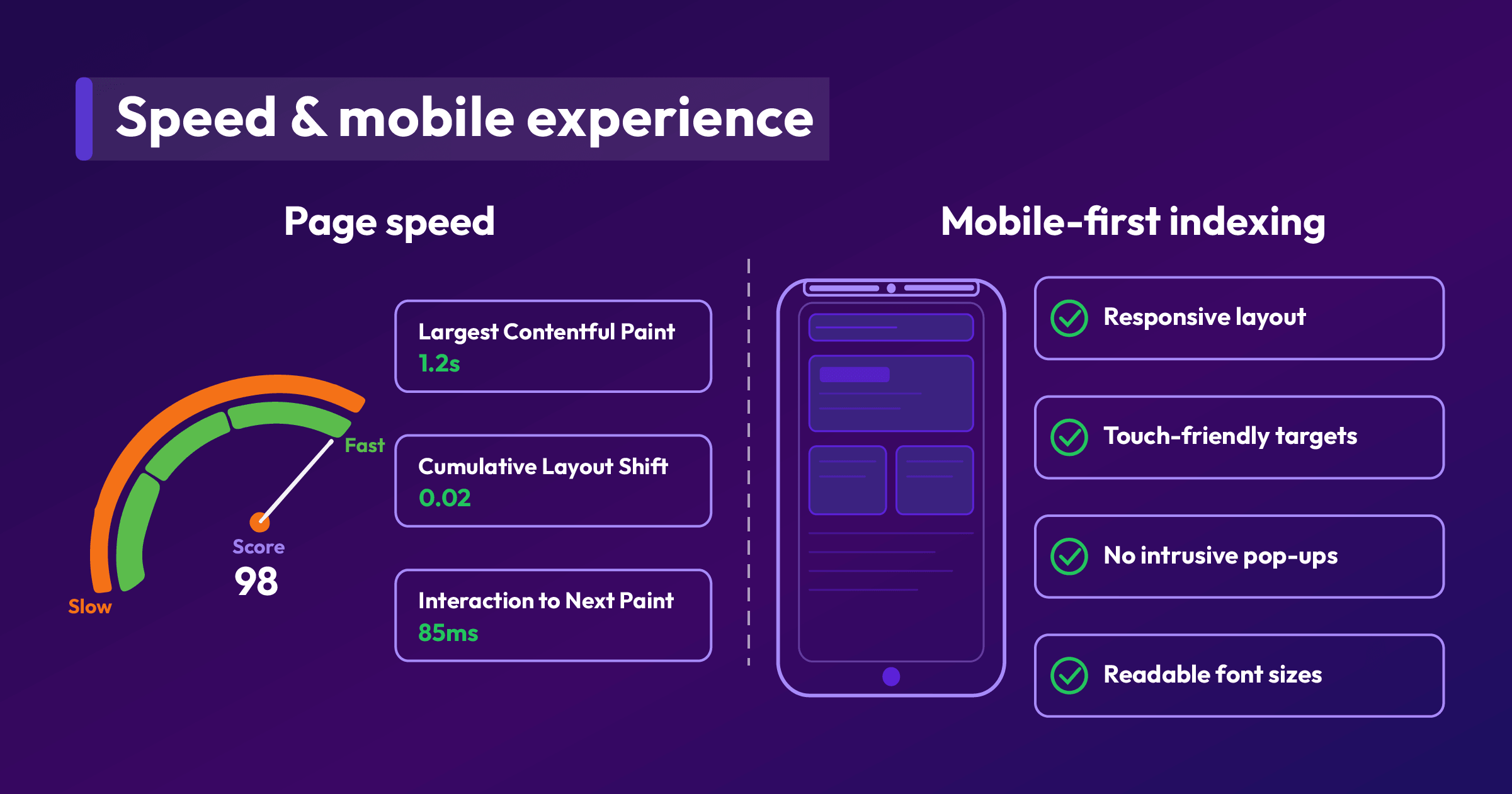
Speed affects both rankings and user behavior. Slow pages lead to higher bounce rates, shorter sessions, and fewer conversions.
A thorough SEO audit should evaluate several performance factors.
Page Load Time
Pages should load quickly on both desktop and mobile devices. Delays of just a few seconds can cause visitors to leave before the content even appears.
Tools like PageSpeed Insights help identify slow elements that need improvement.
Image Optimization
Images are one of the most common causes of slow websites. During an audit you should check:
- oversized image files
- missing compression
- outdated formats such as large PNG files
- lack of modern formats like WebP
Optimized images dramatically improve loading speed.
Script and Plugin Bloat
Many websites accumulate unnecessary scripts over time.
Examples include:
- unused tracking tools
- excessive marketing scripts
- outdated plugins
- redundant JavaScript libraries
Each additional script increases loading time.
Server and Hosting Performance
Even a well optimized site can be slow if the hosting environment is weak.
An audit should review:
- server response times
- caching configuration
- content delivery networks
- database performance
Fast hosting infrastructure provides the foundation for consistent performance.
3. Mobile Experience: Your Site Must Work Perfectly on Phones
Most searches now happen on mobile devices. Google primarily evaluates websites using mobile-first indexing, which means the mobile version of your site is the main version considered for rankings.
A mobile experience audit focuses on usability and accessibility.
Responsive Design
Your website should adapt smoothly to different screen sizes. Layouts must remain readable and functional on phones, tablets, and desktops.
Problems to watch for:
- elements overlapping on smaller screens
- horizontal scrolling
- images breaking page layouts
Mobile Navigation
Menus and navigation links should be easy to use with touch.
Good mobile navigation includes:
- simple menus
- large tap targets
- clear category structure
Visitors should be able to find information quickly without frustration.
Mobile Page Speed
Mobile networks can be slower than desktop connections. Pages must therefore be lightweight and efficient.
Reducing scripts and compressing images is especially important for mobile performance.
Readability
Mobile users prefer concise, scannable content. An audit should review:
- font sizes
- spacing between paragraphs
- line length
- heading clarity
Readable content improves both user experience and engagement.
Intrusive Elements
Popups that block content can harm rankings and frustrate users. Mobile pages should avoid intrusive overlays that prevent visitors from accessing information easily.
4. On-Page SEO Optimization
On-page SEO tells search engines exactly what each page is about. Clear signals help algorithms match your content with relevant searches.
Title Tags
Title tags remain one of the strongest ranking signals. Every page should have a unique title that clearly describes the topic.
Effective titles are:
- concise
- descriptive
- aligned with search intent
Meta Descriptions
While meta descriptions are not direct ranking factors, they strongly influence click-through rates.
A strong description should:
- summarize the page clearly
- encourage curiosity
- match the user’s search intent
Header Structure
Headings organize your content for both readers and search engines.
Best practices:
- one clear H1 per page
- logical H2 and H3 sections
- descriptive headings that reflect the content
Structured pages are easier to understand and index.
Keyword Alignment
Each page should target a specific topic or query. During an audit you should confirm that:
- the primary keyword appears naturally
- related phrases support the topic
- the content answers the intended search query
Keyword clarity helps search engines interpret relevance.
Image Alt Text
Alt text helps search engines understand images and improves accessibility for users with screen readers.
Descriptive alt text also provides additional keyword context.
URL Structure
Clean URLs are easier for both users and search engines to interpret.
Good URLs are:
- short
- readable
- descriptive
For example, example.com/seo-audit-checklist is clearer than a long string of parameters.
5. Content Quality and Search Intent
Content remains the core of modern SEO. Search engines increasingly evaluate whether content genuinely helps users.
A strong audit looks beyond word counts and focuses on usefulness.
Solving Real Problems
Effective content answers specific questions or solves clear problems.
During an audit ask:
- Does this page help someone accomplish something?
- Does it answer the query better than competing pages?
Pages that fail to provide value rarely perform well in search.
Matching Search Intent
Every search has a purpose. The content must align with that intent.
Common intent categories:
- informational searches
- transactional searches
- navigational searches
If the page does not match the user’s goal, rankings will struggle.
Content Freshness
Outdated information can reduce credibility. An audit should identify pages that need updates.
Updating statistics, examples, and references can significantly improve performance.
Content Depth
Thin pages often lack authority. Strong content provides:
- clear explanations
- supporting details
- helpful examples
Depth signals expertise and trust.
Structure and Readability
Content should be easy to scan. This includes:
- short paragraphs
- bullet lists
- clear headings
Structured content improves engagement and helps readers find information quickly.
Duplicate Content
Duplicate pages can confuse search engines.
Audits should identify:
- similar blog posts covering the same topic
- duplicate product descriptions
- multiple URLs showing identical content
Resolving duplicates strengthens the overall authority of your site.
6. Internal Linking and Site Structure
Internal linking connects your pages into a logical ecosystem. It helps search engines understand which pages are most important and how topics relate.
Logical Hierarchy
A well-organized site typically follows a structure such as:
- homepage
- core service pages
- supporting articles
- detailed blog posts
This hierarchy helps distribute authority across the website.
Internal Link Distribution
Important pages should receive more internal links.
Examples:
- service pages
- cornerstone content
- category pages
These links signal priority to search engines.
Broken Internal Links
Broken links harm user experience and waste crawl resources. Audits should identify and repair any links leading to missing pages.
Orphan Pages
Orphan pages have no internal links pointing to them. This makes them difficult for search engines to discover.
Connecting these pages strengthens site cohesion.
Anchor Text Clarity
Anchor text should clearly describe the destination page. Descriptive anchors improve relevance signals and guide readers more effectively.
7. Backlink Profile and Authority Signals
Backlinks remain one of the strongest indicators of credibility in search algorithms.
However, quality matters far more than quantity.
Referring Domains
An audit should review how many unique websites link to your site. A diverse set of reputable sources strengthens authority.
Link Quality
Not all links are beneficial. High quality links typically come from:
- reputable publications
- industry organizations
- educational resources
- relevant blogs
Spammy links from low quality sites can damage trust.
Anchor Text Diversity
Overly optimized anchor text can appear manipulative. Natural backlink profiles include a variety of anchor types.
Examples include brand names, URLs, and descriptive phrases.
Toxic Backlinks
Some links originate from spam networks or malicious domains. These should be identified and potentially disavowed.
Lost Backlinks
Over time some websites remove or update links. Monitoring lost backlinks helps you understand changes in your authority profile.
Brand Mentions
Sometimes websites mention your business without linking to it. These mentions can often be converted into valuable backlinks.
8. Local SEO Signals

For many small businesses, local search visibility is essential.
A local SEO audit examines signals that influence map rankings and geographic search results.
Google Business Profile
Your business profile should be fully optimized with:
- accurate business information
- clear service descriptions
- updated images
- regular posts
Complete profiles improve local visibility.
NAP Consistency
Your business name, address, and phone number must remain consistent across the web.
Inconsistent listings can confuse search engines and weaken trust signals.
Local Citations
Citations are mentions of your business in directories or industry listings. Consistent citations reinforce location relevance.
Reviews
Customer reviews influence both rankings and user decisions.
A healthy review profile includes:
- recent feedback
- thoughtful responses
- authentic customer experiences
Location Pages
Businesses serving multiple areas may benefit from dedicated location pages describing services in each region.
These pages help search engines connect your services with specific geographic queries.
9. Structured Data and Schema Markup
Structured data helps search engines interpret the meaning of your content more accurately.
Schema markup adds additional context to your pages.
Common schema types are:
- organization schema
- local business schema
- article schema
- FAQ schema
- product schema
Proper schema can enable enhanced search results such as:
- FAQ snippets
- review stars
- knowledge panels
These enhanced results increase visibility and improve click-through rates.
Even though schema does not guarantee rich results, it significantly improves the chances that search engines will present your content more prominently.
10. AI Search and Generative Engine Readiness
Search is evolving quickly with the growth of AI-generated answers and conversational search.
Websites increasingly need to provide clear, structured information that machines can interpret easily.
Key audit considerations:
- clear topic authority across related content
- structured headings and logical organization
- accurate facts and reliable information
- consistent business details across pages
Websites that demonstrate expertise and clarity are more likely to be referenced in AI-generated summaries.
Preparing for this shift helps ensure long-term visibility.
Final Thoughts
An SEO audit reveals the hidden strengths and weaknesses of your website. It examines technical performance, content quality, authority signals, and user experience to ensure your site meets modern search expectations.
Even small issues such as slow images, missing internal links, or outdated pages can limit your visibility. Addressing these factors improves both search rankings and the experience visitors have on your site.
If you want a clearer understanding of how your website is performing, a professional review can uncover opportunities you may not see on your own.
Need a Professional SEO Web Audit?
At ShiftWeb, we provide comprehensive website audits designed to identify technical issues, SEO opportunities, and growth strategies for small businesses.
If you want to see exactly what is helping or hurting your search performance, explore our website audit services to perform better in today’s search landscape.


